
Sacred Light and the Silent Mind - Persia's Ancient Path to Inner Peace
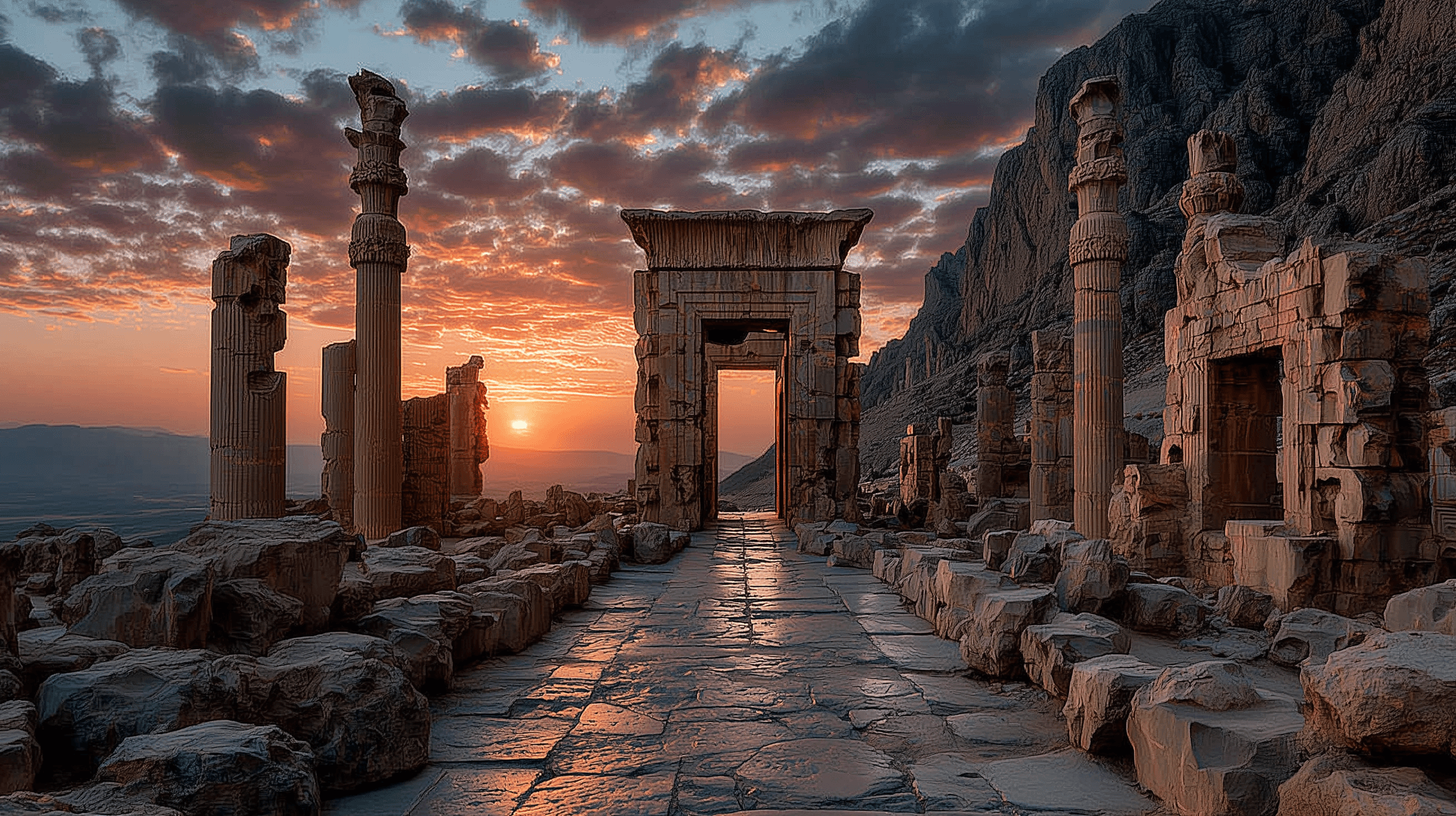
Sacred Light and the Silent Mind: Persia's Ancient Path to Inner Peace
Feeling the relentless hum of modern life vibrating in your bones? What if the antidote wasn't another gadget, but a return to wisdom etched in the sands of time? Imagine a "Sacred Light," not of a screen, but of divine illumination, and a "Silent Mind," not of emptiness, but of profound presence.
We embark on a journey into the heart of Persian spiritual traditions, where the interplay of divine light and meditative silence has shaped a unique pathway to knowledge, tranquility, and self-discovery for millennia. From the crackling flames of ancient Zoroastrian fire temples to the ecstatic verses of Rumi, we'll uncover a heritage rich with tools for our contemporary quest for well-being.
Join me as we trace this luminous path, encounter its key figures, and explore how these ancient concepts are being reimagined and revitalized in the 21st century.
The Radiance of Reality: Unpacking "Sacred Light"
Forget the mundane glow of a lightbulb. We're diving into Ishraq, a philosophy of Illumination. Envision reality not as a collection of discrete objects, but as a spectrum of light emanating from a single, infinitely radiant source: God, the Nur al-Anwar – the Light of Lights.
Ishraq isn't about rote learning; it's about direct, almost visionary, "seeing" of truth. It is Knowledge by Presence. Imagine knowing something not because you read it in a book, but because its essence unfolds before your inner eye, much like your physical eyes simply perceive light. This is immediate, intuitive understanding. All creation, from the loftiest archangels to the most mundane objects, are emanations of this divine light, existing on a gradient from pure luminosity to what Suhrawardi called "suspended light" or even "darkness"—a dimming of the divine radiance.
This isn't just a philosophical abstraction; it has deep roots in ancient Persia. Long before the advent of Islam, Zoroastrianism revered fire (Atar) as a symbol of divine presence. The Xvarnah, a radiant aura bestowed upon kings and prophets, signified divine favor.
Shahab al-Din Suhrawardi, the 12th-century "Master of Illumination," consciously revived this "lost wisdom" of ancient Persia. He artfully blended it with Islamic thought, and a dash of Neoplatonism, forging a unique philosophical system. In fact, he even adopted Zoroastrian angelic names for his hierarchy of lights. Suhrawardi's philosophy isn't tied to a specific geography; the "Orient" isn't a place, but a direction – a spiritual orientation towards the pure light of the spirit, as opposed to the heavy materiality of the "West."
The Power of "Silent Mind": Where Words End, Wisdom Begins
Now, let's turn our attention to the complementary practice of Muraqaba Khamush. This isn't merely about keeping quiet. Muraqaba means "to watch over," and Khamush signifies "silent." Combined, they describe a state of vigilant inner stillness, a focused awareness on the Divine that transcends mere absence of sound.
Consider the iconic poet Jalaluddin Rumi, who often signed his poems simply, "Silent." This was not a mere affectation. Rumi believed that "Silence is the language of God; all else is poor translation." His soaring verses were a bridge, an attempt to articulate the ineffable, but the true experience lay beyond the reach of language, in the profound stillness of the heart.
The practice of Muraqaba Khamush might involve sitting in quiet contemplation, gently pressing the tongue to the roof of the mouth – a symbolic "seal" to contain inner energies – and observing thoughts as they drift by like clouds. The goal is to quiet the incessant inner monologue, to open the "inner ear" to the subtle whispers of the Divine.
Not all silence is equal. There are levels, ascending from the simple act of refraining from speech, to quieting the incessant chatter of the mind, and ultimately, to a profound state where the individual self dissolves, leaving only the boundless expanse of the Divine. This is where intuition (Kashf) blossoms and deep inner peace (Sakinah) settles. A silent mind becomes a polished mirror, reflecting the divine light with clarity.
Echoes Through Time: The Intertwined History of Light and Silence
Over millennia, the concepts of light and silence have transformed, adapted, and intertwined, shaping the spiritual landscape of Persia and beyond.
In Zoroastrianism, silence was not merely a virtue but a protective shield for sacred elements. Zoroaster himself retreated into a 23-year period of silent contemplation before receiving his divine revelation. After the arrival of Islam, the "sacred fire" of Zoroastrianism found a new home in the human heart. Silent remembrance (Dhikr-i Khafi) became the soul's secret language with God, a whispered communion beyond the reach of the external world.
For the Illuminationists, silence wasn't simply a mystical tool; it was a crucial element of intellectual inquiry, a prerequisite for achieving direct "Knowledge by Presence." Sufism elevated these theories into a lived path, where silence became the means to achieve "extinction" (Fana) of the ego, allowing the seeker to become one with the Divine light.
Sparks and Shadows: Controversies and Challenges
The path of light and silence has not always been smooth. Throughout history, mystics have often found themselves at odds with religious and political authorities.
From Mani and Mazdak in pre-Islamic Persia to Mansur Al-Hallaj and Suhrawardi himself, history is replete with figures who paid the ultimate price for their "ecstatic" mystical claims, deemed heretical by those in power. Al-Ghazali, the influential 11th-century scholar, attempted to bridge the gap between mysticism and orthodoxy by "legalizing" Sufism within the framework of mainstream Islam, ushering in a brief "golden age" for mystical poetry. Yet, the Safavid dynasty, ironically born from a Sufi order, later ruthlessly suppressed Sufism, favoring legalistic clerics who posed less of a challenge to their authority. This historical shift led to the stigmatization of "Sufism," while "Irfan," or intellectual mysticism, gained prominence as a more palatable alternative. Even Mulla Sadra, the brilliant 17th-century philosopher, faced accusations of pantheism and heresy, and was forced into exile for his attempts to synthesize philosophy and mysticism.
In contemporary Iran, the legacy of these tensions persists. While "philosophical mysticism" (Irfan) is still respected, even practiced by figures like Ayatollah Khomeini, organized Sufi orders, such as the Gonabadi Dervishes, face severe persecution. The Iranian government views dervishes as a threat to its authority, leading to mass arrests, torture, and the destruction of their places of worship, particularly after events such as the 2018 Golestan-e Haftom incident and the 2026 Nationwide Uprising. Allegations of state infiltration into the leadership of groups like the Gonabadi Dervishes have further fueled internal divisions, with accusations of a "governmental Sufism" emerging, suggesting a co-optation of the tradition for political purposes.
Reimagining the Sacred: Persian Spirituality in the 21st Century
Despite these challenges, Persian spirituality continues to evolve and find new expressions in the 21st century.
Rumi's global popularity has sparked a debate about authenticity, with scholars critiquing sanitized translations and advocating for direct translations that restore the Islamic context of his work. Online platforms are actively combating "fake Rumi quotes," employing technology to promote authentic Persian texts and their original meanings.
Within Iran, a "post-religious" spirituality is on the rise, with disillusioned individuals seeking the inner depths of mysticism without the confines of institutional dogma. Thinkers like Mostafa Malekian and Soroush Dabbagh are at the forefront of this movement, crafting a modern, rational, and ethics-based Irfan. Poetry, particularly the works of Rumi and Sohrab Sepehri, has become a form of "secular scripture," interpreted through the lenses of humanism and nature mysticism. Ancient concepts are also finding new, accessible forms in the burgeoning realm of pop-spirituality, from "Cosmic Mysticism" to Jungian psychology workshops and the widespread adoption of yoga and meditation.
Even Zoroastrianism is experiencing a modern renaissance, led primarily by diaspora communities. Gathic Reform prioritizes Zoroaster's Gathas, presenting the faith as a rational-ethical philosophy compatible with modern science. Virtual rituals, digitized manuscripts, and "cyber-temples" connect a scattered global community. However, the faith also grapples with internal controversies, such as the "China Origin" debate sparked by recent archaeological finds, and the ongoing crisis surrounding the "Towers of Silence" due to the decline of vulture populations.
The Future is Bright (and Silent): Modern Applications and Upcoming Trends (2024-2026)
The wisdom of Persian spirituality is increasingly finding practical applications in various fields, offering a beacon of hope for the future.
Concepts such as Nafs (ego), Qalb (heart's intuition), and Ruh (spirit's pure core) are being integrated into Transpersonal Psychology and Cognitive Behavioral Therapy, offering new frameworks for understanding the human psyche. The Tamarkoz Method, a Sufi meditation practice, is showing promising clinical results in reducing stress and depression. Poetry therapy, utilizing the works of Rumi and Hafez, is helping individuals with emotional regulation and finding meaning in life. Even digital Sufi apps are emerging, providing guided meditations and reminders to integrate these ancient practices into daily life.
Eco-Sufism is reinterpreting concepts like stewardship (Khalifah) and the unity of being (Wahdat al-Wujud) as potential solutions to the ecological crisis. Eco-Zoroastrianism is highlighting the faith's historical emphasis on environmental protection as a model for a sustainable future.
Emerging technologies are also playing a role. AI is being used to reinterpret Persian allegories into visual narratives, creating virtual reality experiences of Suhrawardi's Alam al-Mithal. Gen Z is blending Rumi, secular humanism, and pre-Islamic nationalism on social media. New, authentic verse translations of works such as Rumi's Masnavi and Attar's broader collection are being released by major publishers, ensuring that this ancient wisdom continues to shine.
Conclusion: Embracing the Sacred Light and Silent Mind
Our journey through the Persian spiritual traditions reveals a rich tapestry woven with threads of divine light and profound silence. These ancient paths offer relevant insights for navigating the complexities of modern life, fostering inner peace, ecological awareness, and a deeper connection to self and spirit.
Whether through silent contemplation, the study of timeless poetry, or engaging with modern wellness practices, the invitation to experience the "Sacred Light and Silent Mind" remains open. Perhaps, in embracing these ancient practices, we can find our own path to illumination and inner peace amidst the chaos of the modern world.