
The Mind-Bending Journey of Meditation, From Ancient Temples to AI Brain-Hacks!
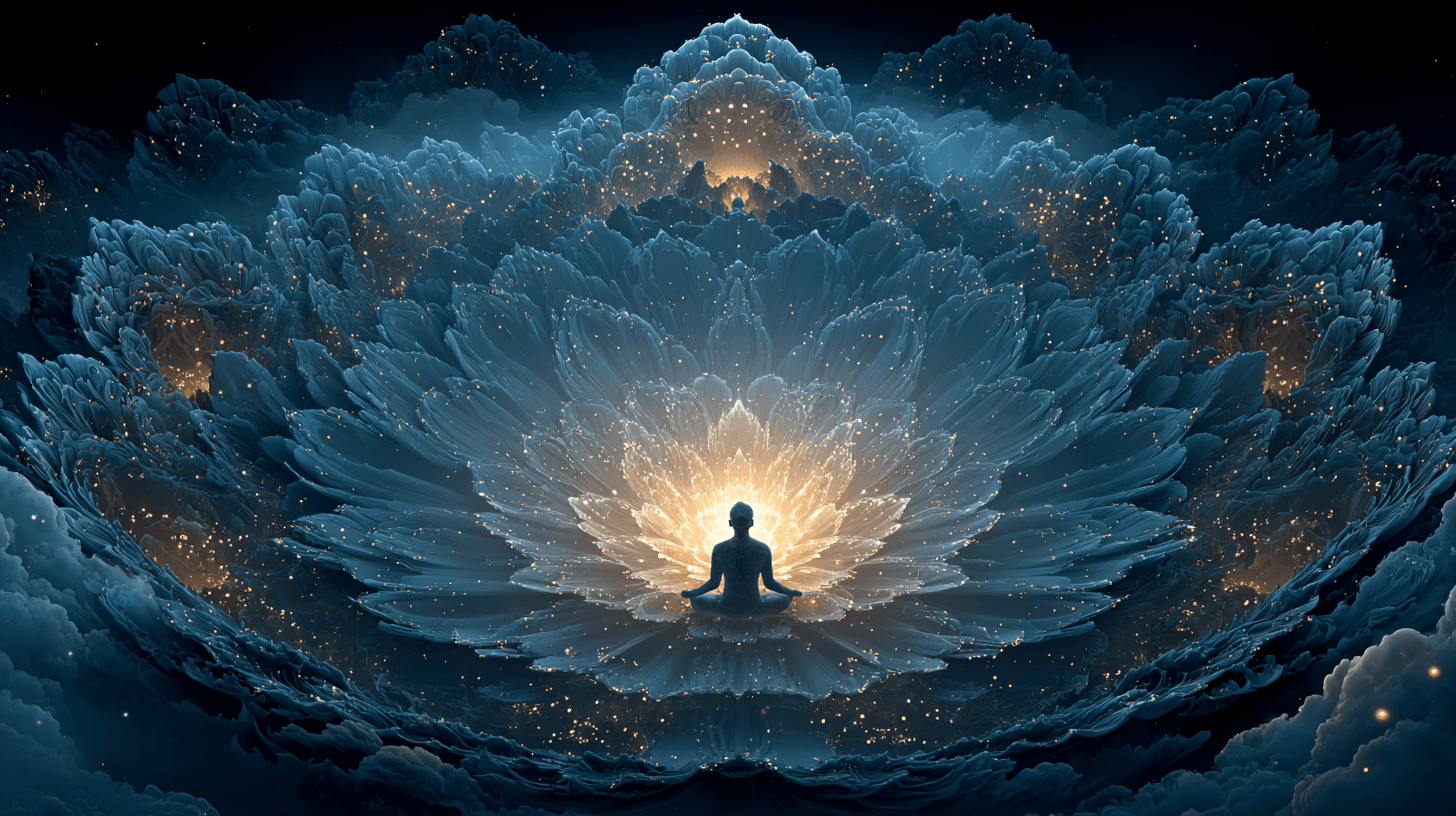
The Mind-Bending Journey of Meditation, From Ancient Temples to AI Brain-Hacks!
I. Introduction: Your Brain on Pause (And Why It Matters More Than Ever)
Ever feel like your brain is on overdrive? A relentless barrage of notifications, anxieties humming beneath the surface like a faulty wire? You're not alone. This incessant mental chatter, a defining characteristic of our age, has reignited a timeless pursuit: inner calm. The quest itself is as old as humanity, yet the methods, the contexts, the very understanding of what it means to find stillness are undergoing a radical transformation.
Buckle up as we explore meditation's epic past, wild present, and mind-blowing future, crossing continents, dissecting controversies, and challenging everything you thought you knew about this ancient practice in our increasingly complex world.
II. Time Travel Through Tranquility: Meditation's Ancient Roots
Forget the trendy apps and celebrity endorsements. Meditation wasn't invented yesterday. It’s been chilling in the background, a quiet undercurrent to the clamorous river of history, for millennia. To understand its current form, its potential pitfalls, and its dazzling future, we must first excavate its past.
- India: The OG Masters
Imagine the mists of time parting, revealing the Indus Valley Civilization. Even here, long before the written word, we find tantalizing clues: seals depicting figures in unmistakable yogic postures. These aren't mere stretches; they hint at a sophisticated understanding of the body-mind connection. Fast forward to the Vedic era, and the whispers of wisdom grow louder. Terms like Dhyana (contemplation), pregnant with meaning, begin to take shape. The Yoga Sutras of Patanjali, a foundational text, lays the groundwork for inner liberation, a meticulously crafted roadmap refined by spiritual giants like the Buddha. These were not simply exercises; they were profound investigations into the nature of consciousness itself.
- China: Finding Your Flow
Even before the arrival of Buddhism, Chinese sages were plumbing the depths of inner experience. Daoist practitioners engaged in "sitting and forgetting" (Zuowang), a practice aimed at harmonizing with the natural order, the Dao. This wasn't passive inactivity; it was a deliberate act of relinquishing the ego to become one with the universe. Confucians, too, dabbled in Jingzuo ("quiet sitting") seeking mental clarity and moral cultivation. Then, a seismic shift: Buddhism enters the scene, merging seamlessly with existing traditions to create Chan (the precursor to Zen). This new synthesis prioritized direct enlightenment through meditation, a path of immediate experience rather than philosophical debate. The emphasis shifted from theoretical understanding to embodied practice.
- The Mediterranean Mystery Tour
The narrative of meditation isn't solely an Eastern affair. Ancient Egypt's secret Mystery Schools, shrouded in secrecy, utilized visualizations of gods and sacred sounds (Heka) to achieve divine alignment. These rituals weren't just theatrical performances; they were attempts to access altered states of consciousness, to commune with the divine through focused intention. Greek philosophers, too, engaged in their own form of Melete (mental exercise). Pythagoreans sought to purify their souls, while Stoics, figures like Marcus Aurelius, embraced mindfulness (Prosoche) and the practice of "pre-meditation on evils." This wasn't about escapism; it was about cultivating resilience, preparing the mind for the inevitable challenges of life. Intriguingly, Alexander the Great's campaigns brought Greek thinkers face-to-face with Indian sages, sparking a cross-cultural "mind-melding" that profoundly influenced Stoicism’s quest for ataraxia (unshakeable tranquility). A subtle, yet significant exchange of ideas that shaped the very foundations of Western thought.
III. Meditation's Mainstream Moment: What's Happening Now (2024-2025)
The past, rich and layered, sets the stage for the present. Meditation, once relegated to monasteries and ashrams, is now officially everywhere, from the sterile environments of boardrooms to the intimate spaces of our bedrooms.
- Global Buzz & Why Everyone's Doing It:
The data speaks volumes: Adoption is soaring, projected to reach 35% globally by 2025. This isn't a fleeting fad; it's a significant cultural shift, particularly among younger generations grappling with the anxieties of the modern world: the rise of AI, economic uncertainties, and the constant pressure to perform. While India remains a stronghold, unexpected players like Morocco and Mexico are exhibiting high adoption rates. Interestingly, the motivations differ across cultures. Westerners often frame it as self-care, a tool for managing stress, while Eastern practitioners often retain a deeper connection to its sacred roots.
- Your Brain on Science: The Clinical Verdict:
The skeptics have been silenced, at least partially. Science now confirms what practitioners have known for centuries: meditation works. It's not just "woo-woo." Rigorous studies consistently demonstrate its efficacy in reducing anxiety, depression, and stress, sometimes rivaling traditional therapy. But the benefits extend beyond the psychological. Physical perks include lower inflammation markers, reduced blood pressure, and even tantalizing hints that it may slow cellular aging by impacting telomeres. Brain scans reveal a literal rewiring of the brain, enhancing executive function and emotional regulation. These findings are not just encouraging; they are transformative, offering a tangible basis for understanding the power of inner stillness.
- Meditation Goes Corporate, Schools, and Hospitals:
The implications are profound. "Quiet rooms" are appearing in offices, "meditation breaks" are being incorporated into school curricula, and doctors are increasingly "prescribing" mindfulness for chronic pain and stress. The ultimate validation? The prospect of insurance coverage, with the potential for standardized billing codes signaling a formal integration into the healthcare system.
- Welcome, World Meditation Day!
The United Nations made it official in 2024: December 21st is now World Meditation Day, a global moment of pause, with millions participating worldwide. A symbolic gesture, perhaps, but one that underscores the growing recognition of meditation's potential to foster collective well-being.
IV. The Not-So-Zen Side: Controversies & Hidden Risks
But let's not paint an overly rosy picture. The path to inner peace is not always smooth, and the mainstreaming of meditation has brought with it a host of controversies and potential pitfalls.
- "McMindfulness": The Fast-Food Version?
Critics argue that we are commodifying ancient wisdom, turning it into a corporate "quick fix" that ignores systemic issues. Is meditation simply making us calmer drones, more compliant workers, rather than truly liberated beings? Is it a tool for personal well-being or a means of social control?
- The Secular vs. Sacred Showdown:
A fundamental debate rages: Should we strip away the spiritual elements to make meditation more accessible, or does that dilute its transformative power? Is scientific validation the only valid form of validation, or are we devaluing centuries of lived experience and the nuanced understanding embedded within spiritual traditions?
- Cultural Appropriation: Whose Practice Is It Anyway?
The question of cultural appropriation looms large. When Western influencers repackage Eastern traditions without acknowledging their origins or respecting their cultural context, it raises legitimate concerns. Are we turning deeply meaningful symbols into trendy accessories, devoid of their original significance?
- The Actual "Dark Night": Meditation's Adverse Effects:
Perhaps the most unsettling aspect of meditation's rise is the growing awareness of its potential adverse effects. Contrary to popular belief, it's not universally beneficial. Studies suggest that up to 60% of practitioners may experience distressing side effects, ranging from increased anxiety and panic attacks to re-traumatization. In rare cases, more severe symptoms can emerge, including depersonalization, dissociation, and even psychosis. Intense retreats and certain "deconstructive" practices, such as Vipassana, appear to carry higher risks. The emerging mantra is clear: "First, Do No Harm." It's crucial to know your limits, seek guidance from trauma-informed teachers, and stop immediately if something feels wrong.
- One Size Doesn't Fit All: The Biocultural Blend:
The key lies in recognizing that while the brain's biological capacity for mindfulness may be universal, the experience of meditation is deeply shaped by culture and worldview. Effective interventions require "cultural adaptation," a move away from a generic, one-size-fits-all approach towards a more nuanced and culturally sensitive understanding.
V. Future Forecast: Meditating with Machines (2026-2030)
The future of meditation is poised to be profoundly shaped by technology, blurring the lines between ancient wisdom and cutting-edge innovation.
- Your AI Mind Coach:
Imagine an AI companion that understands your mental state better than you do. "Digital phenotyping," utilizing passive sensors that track sleep patterns, typing speed, and heart rate variability, will know when you're stressed before you consciously register it. Generative AI will then craft real-time guided scripts and music tailored to your precise mental and emotional needs, creating a personalized meditation experience unlike anything we've seen before.
- Neurofeedback Goes Invisible:
The clunky EEG machines of the past will fade into memory. Instead, EEG-grade sensors miniaturized into "smart earbuds" or glasses will continuously monitor your brain activity, gently nudging you back to focus with subtle auditory or visual cues the moment your mind begins to wander. Your phone camera might even analyze micro-changes in your facial skin to detect heart rate and stress levels, providing an even more seamless and unobtrusive monitoring experience.
- VR & The Metaverse: Your Zen Digital Sanctuary:
Step into a virtual world designed to enhance your meditation practice. Imagine a virtual forest that dynamically adapts and blooms as you relax, visually reflecting your internal state. The Metaverse will enable group meditations where you can "see" the collective calm of others through shared visual cues, fostering a sense of connection and shared intention.
- Brain-Computer Interfaces (BCIs): Mind Control, Literally:
The most radical development lies in the realm of Brain-Computer Interfaces (BCIs). Consumer devices utilizing weak electrical currents (tDCS/tACS) could "prime" your brain, making it easier to access deep meditative states. High-end BCIs might eventually allow you to navigate virtual meditation spaces using only your thoughts, a level of immersion and control that was once the realm of science fiction.
- The Ethical Frontier: Who Owns Your Brainwaves?
However, this technological revolution raises profound ethical questions. With technology capable of peering into our minds, "Neurorights" and data privacy are becoming critical concerns. Will we become overly reliant on gadgets for achieving inner peace, potentially diminishing our natural ability to self-regulate without technological assistance? California’s SB 1223, addressing these very concerns, offers a glimpse into the legislative battles that lie ahead.
VI. The Universal Mind Continues Its Journey
From the ancient caves and scrolls of our ancestors to the digital realms and brain implants of the future, the quest for inner peace remains a fundamental human drive, an enduring testament to our capacity for self-reflection and transformation.
Meditation is evolving, challenging, and transforming – a powerful, yet nuanced, tool for navigating an increasingly complex and chaotic world. Its journey, both personal and collective, continues.
So, whether you're channeling your inner ancient sage in a silent retreat or syncing with an AI-powered meditation app, remember that the journey inward is just beginning. The exploration of consciousness, the pursuit of stillness, is an ongoing adventure, one that promises to reshape our understanding of ourselves and our place in the universe.