
The Secret Power of Your Breath - A Journey into Sufi Meditation and Divine Love
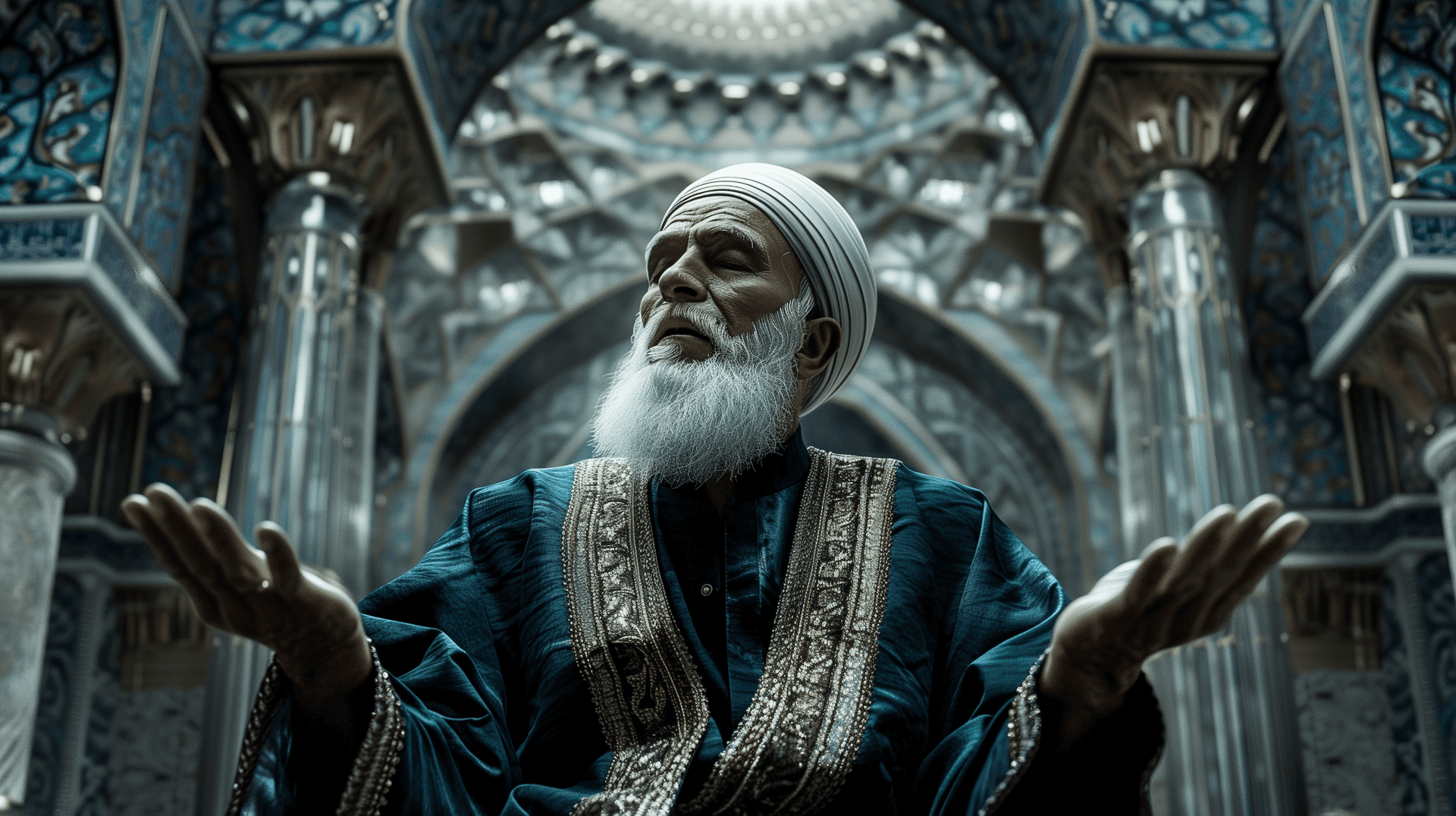
The Secret Power of Your Breath: A Journey into Sufi Meditation and Divine Love
Introduction: More Than Just Air
Ever felt like your breath holds a secret, a whispered promise of something more? In the mystical tradition of Sufism, it undeniably does. It’s not merely a biological function sustaining life, but a shimmering thread connecting us directly to the Divine, a vehicle for experiencing profound, transformative love. Welcome, dear reader, to a fascinating exploration where the rhythm of breath, the stirring of spiritual awakening, and the intoxicating experience of Divine Love (Ishq!) are inextricably intertwined.
1. The Breath of the Merciful: A Cosmic Connection
Let's quickly orient ourselves. Sufism, at its heart, is the inner, mystical dimension of Islam – a path focused on directly experiencing God's love and presence, not just intellectually understanding it. Now, consider this: Sufis believe the universe itself came into being through God's breath, a divine "sigh" of creation. This is known as Nafas al-Rahman, the Breath of the Merciful, an expansive, all-encompassing act of divine grace.
And where do we fit into this grand cosmic picture? Your breath, my breath – every single inhalation and exhalation – isn't just a personal, isolated event. It's a tiny, yet vital, echo of this continuous cosmic exhaling and inhaling. Each breath is a participation in the divine act of creation and renewal. A rather profound concept, wouldn't you agree?
2. Whispers Through Time: The Ancient Roots of Rhythmic Remembrance
The story of Sufi breathwork isn't a recent invention. It stretches back centuries, its roots deeply embedded in scripture and the practices of early mystics. The Quran itself emphasizes the importance of "remembering God much" (Dhikr), and the foundational idea of God breathing spirit into Adam lays the groundwork for breath as a conduit of the divine.
Think of early Sufi figures like Rabia al-Adawiyya, the celebrated female mystic, who sought a constant, unwavering awareness of God. For her and others, the breath became a vital, subtle link to that awareness, a quiet pulse of connection amidst the noise of the world.
Over time, these individual experiences blossomed into more formalized practices within various Sufi orders:
- Naqshbandis: Known for their emphasis on "Conscious Breathing" (Hosh dar dam), the Naqshbandis sought to ensure that not a single breath was taken in forgetfulness of God. Some even practiced breath retention to still the restless mind, seeking a deeper state of presence.
- Chishtis: The Chishtis, with their love of music and poetry, blended breathwork with chanting, music, and even integrated elements from local yogic traditions. This embrace of diverse influences highlights the syncretic nature of Sufi practice, its ability to absorb and adapt wisdom from various sources.
- Qadiris: The Qadiris often synchronized their breath with the recitation of sacred phrases like "La ilaha" (inhale – there is no god) and "illa Allah" (exhale – except God), a powerful method of negating the ego and affirming the Divine unity.
It's important to remember that Sufi breathwork didn't arise in a vacuum. It drew inspiration from Hellenistic concepts of "pneuma" (spirit/breath) and the ancient Indian practice of Pranayama (yogic breath control). This fusion of influences resulted in a rich and nuanced "science of the breath," a testament to the interconnectedness of spiritual traditions.
3. The Heartbeat of Practice: How Sufis "Guard the Breath"
The core of Sufi breath practice revolves around Dhikr – remembrance of God. But it's more than just rote repetition of words. It’s a profound spiritual cleansing, a turning of the heart towards the Divine Beloved.
A central practice is Pas-i-Anfas (Mindful Breathing):
- Inhale "Allah": Visualize drawing Divine Light, divine energy, into your heart with each inhalation of the name "Allah."
- Exhale "Hu": With each exhalation of "Hu" (He), release the ego, anxieties, and attachments – letting go of everything that separates you from God.
Some advanced practitioners even explore breath retention (Habs-i-Dam) as a means of silencing the incessant inner chatter and accessing a state of pure, unadulterated presence. This is not merely a physical technique, but a profound spiritual exercise.
For those deeply immersed in the practice, Dhikr can become so ingrained that it synchronizes with their heartbeat, transforming their entire being into a living, breathing song of love for the Divine. The ultimate aim of all these practices is to cultivate Ishq – Divine Love. This isn't just an emotion, but a consuming longing, a fire that transforms the individual, burning away the ego (Fana) until, as some mystics express it, "God is breathing through me."
4. Sufism Today: Ancient Wisdom in a Modern World
Intriguingly, modern science is beginning to offer glimpses into the potential benefits of these ancient practices. QEEG studies are revealing that Sufi breathwork can promote "psychophysiological coherence," a state where the brain and heart rhythms synchronize, potentially leading to vagus nerve stimulation and stress reduction.
Some scholars have observed a trend where Sufi practices are being framed as emotional regulation tools, a "psychology of love" that helps individuals bypass the ego and access deeper states of well-being.
Here's how some contemporary Sufi orders are approaching breathwork:
- Inayatiyya: Emphasizes breath as a means to purify the "subtle body," seeking to discover the sacred "points of origin" between breaths.
- Mevlevi: Views breath as the key to cultivating "Living Presence," grounding individuals in the eternal "now."
- The Universal Force of Ishq: Love isn't merely a feeling, but a fundamental cosmic force capable of transmuting suffering, burning away the illusions of the false self, and ultimately leading to oneness with the Divine.
5. The Storm Clouds of Spirit: Where Sufism Sparks Debate
It's important to acknowledge that Sufism, like any vibrant spiritual tradition, is not without its controversies. One of the most persistent theological debates revolves around the legitimacy of Sufi ecstatic practices such as rhythmic Dhikr or Sama (music and dance). Are these practices forbidden innovations (Bid'ah), or a legitimate path to spiritual realization? Critics argue that the Prophet Muhammad only engaged in quiet Dhikr.
The practice of Sama, particularly the whirling of the Dervishes, often raises questions: is it a source of divine inspiration or a "sensual distraction"? The renowned scholar Al-Ghazali defended Sama as a means of kindling the flame of love, while the more conservative Ibn Taymiyyah worried about its potential to induce a state of spiritual "drunkenness."
Even the ecstatic states (Hal) experienced by some Sufis can be subject to scrutiny, with modern observers sometimes "medicalizing" these profound experiences, questioning whether they are spiritual breakthroughs or manifestations of psychosis.
Sufism's adaptability in integrating local cultural elements has also drawn criticism from some orthodox scholars, who dismiss it as "folk superstition," a diluted version of the "pure message" of Islam.
The presence of Sufi shrines in some regions as major social and political hubs has led to accusations of corruption and undue influence. In some cases, states even promote Sufism as a "moderate" tool to counter extremism, a move that itself generates new controversies.
Perhaps one of the most pressing concerns is the "McMindfulness" of Sufism – the tendency in Western "Neo-Sufism" to "de-Islamize" Rumi and other Sufi practices, stripping them of their Islamic legal and ethical context. This raises important questions about cultural appropriation versus universalization of spiritual wisdom.
Tragically, these debates have sometimes turned violent, with extremist groups targeting Sufi shrines and practitioners.
6. Digital Dervishes and VR Zawiyas: The Future of Sufi Meditation
The digital age is transforming Sufism in profound ways. Traditional lodges (zawiyas) are finding new life online, making ancient practices accessible to a global audience.
Apps like "Sufi: Dhikr & Meditation" and "Timeless Reality" offer guided sessions, audio invocations, and progress trackers. Micro-Sufism is taking hold on platforms like TikTok, where short breathing exercises and Rumi quotes are resonating with younger, tech-savvy generations.
At wellness festivals, you might even encounter EEG headsets that display your brainwave coherence during Dhikr sessions, showcasing the connection between ancient practices and modern "neurowellness."
The "festivalization" of faith is evident in the growing popularity of Sufi music and whirling in "sober raves" and hybrid "Sufi-Yoga" retreats held in exotic locations.
Imagine embarking on a virtual pilgrimage to a Sufi shrine in 360-degrees or participating in a "Digital Dervish" whirling meditation from the comfort of your living room!
We may even see the emergence of AI gurus, specialized bots like "SufiMentor" offering personalized spiritual advice. But can an AI truly "taste" divine presence? That's a question for another time.
The future might even hold the prospect of spiritual authorizations (ijazas) being recorded on the blockchain for added authenticity.
Ultimately, the big question is whether this digital transformation represents a spiritual "thinning" or a necessary evolution. Can screens truly replicate the profound "companionship" (suhba) with a living teacher, the subtle transmission of knowledge and presence that has been the hallmark of Sufi tradition for centuries?
Conclusion: A Breath for All Seasons
Whether it's an ancient ritual performed in a faraway land or a guided meditation experienced through your smartphone, the essence of Sufi breathwork remains the same: a path to inner peace, profound connection, and boundless Divine Love.
Ready to experience it for yourself? Try this simple practice: inhale deeply, silently intoning "Allah," and exhale, releasing all tension with the sound "Hu." Let these sacred names ride the natural rhythm of your breath.
What are your thoughts on the intersection of tradition and technology in the realm of spirituality? Share your reflections in the comments below. Let's explore this journey together.