
The Sound of Silence: Why Your Brain Craves Ambient Piano and Soundscapes
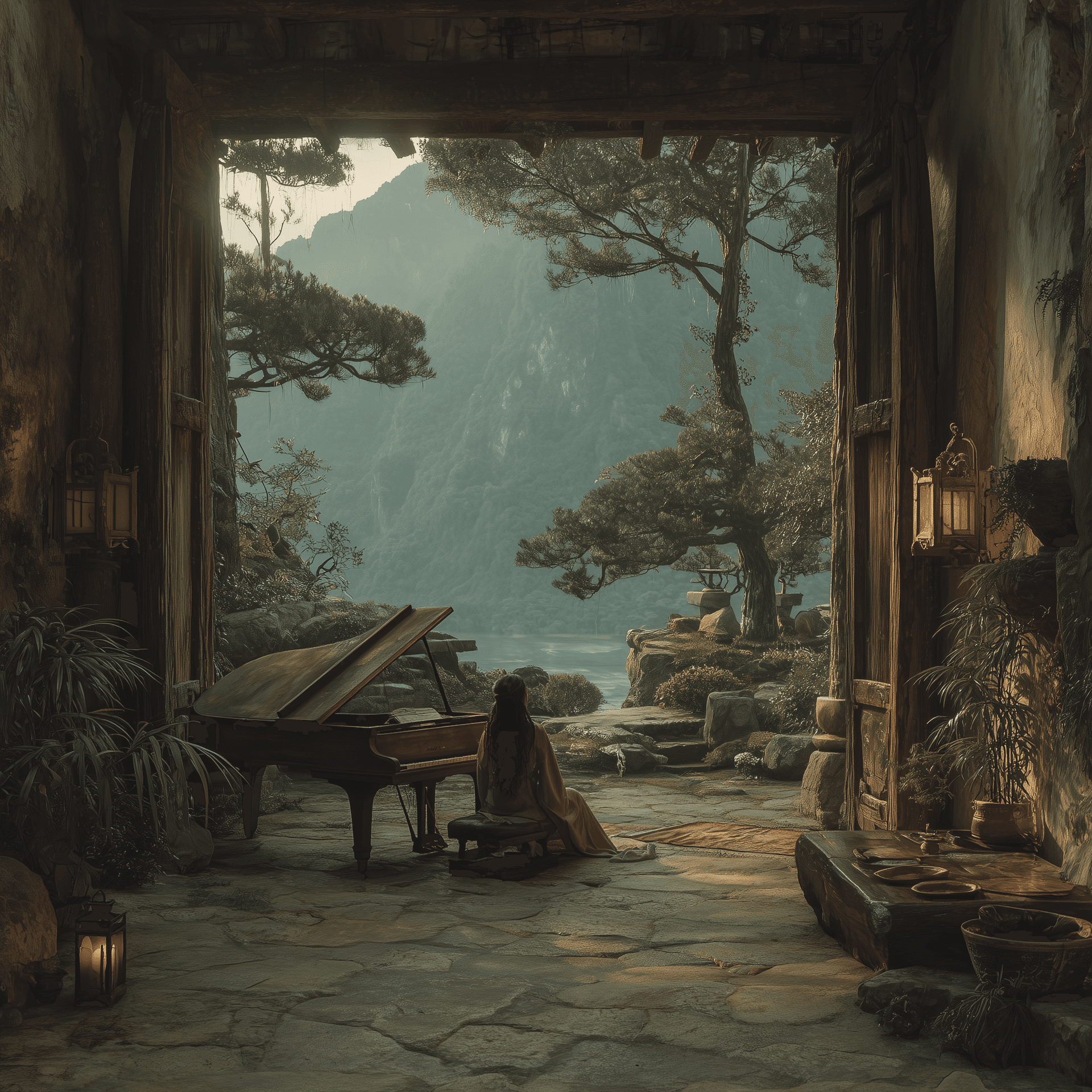
The Sound of Silence: Why Your Brain Craves Ambient Piano and Soundscapes
1. The Art of Doing Less
In an era defined by the relentless staccato of notification pings and the aggressive, dopamine-hook-heavy structure of modern pop, our collective gravitation toward the quietude of ambient piano feels like a necessary act of resistance. Why are we suddenly leaning into music that explicitly tells us to "take it easy"? It is a reaction to sensory saturation. Minimalist piano and ambient soundscapes are not merely "background noise"; they are intentional, structural environments. They provide a sonic architecture that allows the mind to exhale, creating a sanctuary where the frantic pace of the digital world is rendered irrelevant.
2. From "Furniture Music" to Flow State: A Brief History
To understand our current obsession with low-stakes sound, we must look backward to the avant-garde. The concept of "furniture music"—music intended to be ignored, to inhabit the room like a chair or a table—was pioneered by Erik Satie, whose radical minimalism paved the way for John Cage’s 4'33". Cage’s silent masterpiece forced us to confront the ambient noise of existence itself. Yet, it was Brian Eno who truly distilled this into a blueprint. With Music for Airports, Eno transformed these high-concept artistic experiments into a functional utility. He provided the framework for our modern obsession: music that is as ignorable as it is interesting, designed to induce a specific, tranquil state of being.
3. The Science of the "Blank Canvas"
Why do these sparse arrangements feel so profound? Psychologically, they function as an emotional projection surface. Because the music avoids a traditional narrative—lacking the dramatic resolution of a pop hook or the complex interplay of a symphony—it demands very little of the listener. This cognitive "blank canvas" leaves ample room for the brain to process its own internal dialogue. By utilizing the repetitive nature of minimalism and the steady, unobtrusive textures of ambient sound, the brain bypasses the typical urge to analyze complex patterns. When we stop trying to "decode" the music, we are free to slip into a flow state, moving from active consumption to productive, meditative focus.
4. The Great Debate: Does It Help or Hinder?
The utility of these soundscapes remains a point of contention. There is a persistent divide between the "Productivity Boosters," who rely on ambient sound to mask the jagged edges of a distracting office environment, and the "Creative Dilution" critics. The latter argue that even the softest piano can occupy cognitive bandwidth, effectively fragmenting our attention during deep, analytical problem-solving. Ultimately, the verdict rests on individual neurobiology. Research suggests that "screeners"—those capable of effectively filtering out environmental noise—may find music a distraction, while "non-screeners" may find that the right sonic texture helps to stabilize their focus and mitigate external stimuli.
5. Future Beats: The AI Soundscape
We are now entering a new frontier: the era of the "living" soundscape. AI is beginning to move us away from static, looping playlists toward dynamic audio environments that respond to biometric data—our heart rates, our local weather, and our real-time activity. As these systems move toward hyper-personalization, we arrive at a philosophical crossroads. Will we lose the "human touch" of a composer who imbued their work with intent and vulnerability, or will we find that an algorithmically generated soundscape provides a more precise calibration for our mental state? There is a cold efficiency to the latter, yet it promises a level of focus we have arguably never experienced.
6. Curate Your Sanctuary: A Practical Guide
If you wish to curate your own sanctuary of sound, start by aligning the intensity of the audio with the cognitive load of your task. For repetitive, mechanical work, rhythmic drones can provide the necessary momentum to keep you engaged. Conversely, soft, sparse piano is often superior for deep analytical focus, as it provides just enough stimulation to ward off lethargy without intruding upon the executive function. Whether you utilize "set it and forget it" streaming channels or advanced, science-backed platforms like Brain.fm or Endel, the goal remains the same: to curate an auditory environment that serves your mind, rather than one that demands its constant attention.