
The Whispering Reed - Why the Sufi Ney Flute Still Captivates Hearts and Minds
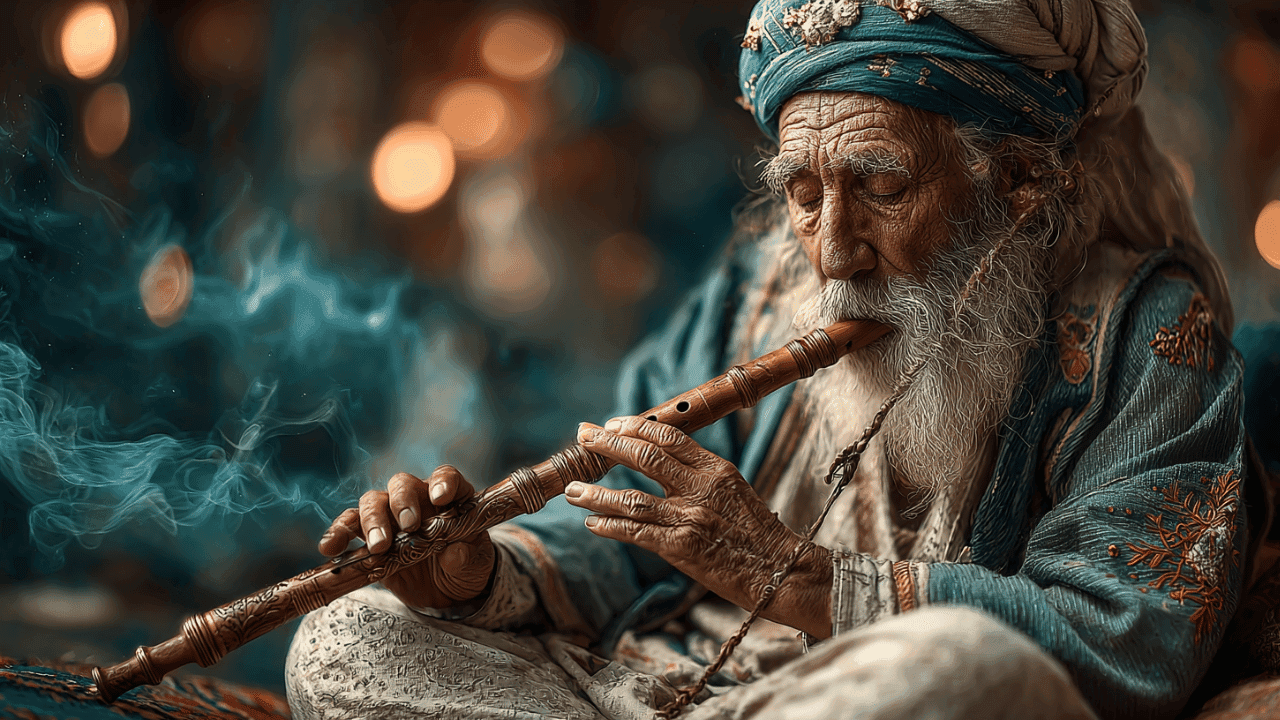
The Whispering Reed: Why the Sufi Ney Flute Still Captivates Hearts and Minds
I. Introduction: A Breath of Spirit
Ever heard a sound that seems to pluck at your very soul? A sound that transcends mere melody and speaks directly to the yearning within? Then, friend, you may have encountered the Ney. It's not just any flute; it's an ancient, end-blown reed instrument, the very heartwood of Sufi mysticism. Its vibe? Melancholic, meditative, and hauntingly beautiful – so much so that it’s often described as the voice of the human soul, a sigh carried on the wind. But, perhaps more accurately, it's a spiritual journey condensed into sound, a direct line, or so it's believed, to divine connection.
II. Echoes from the Ancient Past: The Ney's Timeless Journey
We're not dealing with a recent fad here. The Ney boasts a lineage stretching back over 4,500 years! Imagine that – an instrument whose voice has echoed through millennia, one of the oldest instruments continuously played. Its roots sink deep into the fertile crescents of Mesopotamia (archaeological evidence suggests flutes as early as 5000 BCE!) and Ancient Egypt (around 3000 BCE). Even the name "ney" itself whispers of its origins, derived from the Sumerian word for "reed."
From humble beginnings as a shepherd's simple companion, the Ney evolved, its sound rippling outwards, becoming a cornerstone of Persian, Turkish, and Arabic music. But its transformation into a spiritual icon is inextricably linked with the 13th-century Sufi poet Mevlana Jalaluddin Rumi. He, in a sense, cemented the Ney's spiritual status. His "Masnavi," that epic poem of divine love, opens with the Ney's lament, a poignant metaphor for the soul's yearning for its divine origin. In fact, it is argued that Rumi "invented" Mawlawī order Ney music! And let's not forget the Whirling Dervishes. The Ney became utterly essential to the Mevlevi order's semâ (whirling dervish) ceremonies, its improvisations (taksim) seen not as mere musical flourishes, but as the very "Divine breath" made audible.
III. The Ney Up Close: Craft, Sound, and Soul
Let's consider the instrument itself. Typically, it’s a hollow cane or giant reed, carefully selected and crafted with seven holes – six gracing the front, one on the back. Then there's the "bashpare," that unique flared mouthpiece, traditionally fashioned from buffalo horn, that unlocks the instrument's distinctive voice. It imparts a voice-like quality with an astonishing range and those subtle microtonal nuances that make the Ney so expressive.
But the Ney is so much more than just the sum of its parts. It’s a symbol, you see. The reed, severed from its bed, mirrors the soul separated from its divine source, a potent image of longing and return. Some interpret the seven holes as representations of the seven openings in the human head, symbolizing a path to spiritual maturity. In its entirety, it embodies the concept of the "perfect man," the realized being who has transcended earthly limitations. Its meditative tones, it is believed, can aid focus, melt away stress, and inspire introspection, some even suggesting it helps with sleep. Think of it, then, as soul food for your ears.
IV. Modern Whispers: The Ney in Today's World
Despite historical suppression, (such as Turkey outlawing Sufism in 1925), the Ney tradition was preserved, often in hushed tones, only to experience a remarkable resurgence in the 1990s and continuing to this day. Is it simply a fleeting New Age trend, or something more profound? In Turkey, this renewed interest is inextricably tied to a broader search for spirituality, a yearning perhaps fueled by Rumi's enduring poetry. Players like Hakan Mengüç share Ney music globally, positioning it as a tool for meditation and relaxation. But to truly understand the Ney, one must understand the neyzen, the Ney player. To be a neyzen isn't simply a hobby; it is a transformative, years-long journey that profoundly shapes one's life. Encouragingly, training centers are thriving once more, nurturing the next generation of masters. In this way, the Ney stands as a vital link to cultural and religious roots, adapting to the modern world while steadfastly maintaining its profound spiritual core.
V. The Winds of Debate: Controversies Surrounding the Ney
Yet, the path of the Ney is not without its controversies. A long-standing and complex debate within Islam surrounds the permissibility of musical instruments. Traditionally, many scholars viewed most instruments as impermissible, a distraction from devotion. However, a minority opinion, often embraced by Sufis, allows them for "spiritually uplifting" purposes, emphasizing the intention behind the music. Furthermore, not all Sufis agree on the Ney's role. While the Mevlevi order wholeheartedly embraces it, other orders, like the Naqshbandi, favor silent dhikr over instrumental music, a testament to the diverse paths within Sufism itself.
Then there's the thorny issue of commercialization. As the Ney finds its way into "World Music" and becomes a feature in tourism, some purists, like Kudsi Ergüner, express concern. Is it in danger of becoming "commercialized spirituality," a watered-down version of its true essence? Or is this exposure a necessary means of keeping the tradition alive? Finally, we must acknowledge the historical dominance of men in Ney playing. Contemporary female Ney players like Abida Parveen are challenging these gender roles, asserting that divine gifts transcend such distinctions.
VI. Future Harmonies: The Ney in a Digital Age
What might the future hold for this ancient instrument? Expect to hear the Ney woven into ever more diverse musical tapestries – rock, electronic music (perhaps even "Techno Sufi"!)- jazz, and various world music collaborations. But technology will undoubtedly play a crucial role. Virtual Neys, powered by sophisticated software and sample libraries, are already making authentic sounds accessible to composers worldwide. Imagine a "Hyper-Ney," a traditional instrument equipped with electronic sensors, seamlessly blending acoustic sounds with digital effects! AI could also play a part, assisting in the composition of new Ney pieces that respect traditional maqams or offering personalized learning experiences for aspiring neyzens. Virtual and augmented reality could craft immersive experiences where Ney music guides spiritual journeys in digital realms. We could even see further integration of the Ney's calming qualities into structured sound healing practices, perhaps incorporating biofeedback. But perhaps most crucially, digital preservation becomes paramount. We must ensure the archiving of master performances and teaching materials to combat environmental threats to natural reed sources and safeguard the Ney's legacy for generations to come.
VII. Conclusion: The Enduring Whisper
The Sufi Ney flute is far more than just an instrument; it is a powerful testament to the enduring human quest for spiritual connection. Its melancholic breath, resonating with the themes of separation and longing, continues to offer solace and inspiration across cultures, a universal language spoken from the depths of the soul. Poised delicately between deep reverence for tradition and innovative exploration, the Ney's whisper will continue to resonate, carried on the wind, for generations yet unborn.